Free 30-day trial inside the app (the current offer may vary by platform and store), then a weekly or yearly subscription. This site gives general information, not diagnosis or treatment.
PawLine app, demo pet. Real app answer, not reviewed by a veterinarian.
Short versionAnxiety in dogs is rarely one simple thing. Cornell’s veterinary college says there is usually something else behind it, medical or behavioral. A dated journal of what happened before, during and after each episode helps your vet or behaviorist find it.
Notes that make the vet visit countWrite daily notes in PawLine, keep your dog’s profile and medications in one place, and email the records to your vet.Calm days start with clear notes. Free to download. Try it free, no payment info needed, then decide after the trial.What is PawLine? An AI-powered pet health app whose answers draw on published veterinary research, including sources like PubMed. Ask health questions any hour, get emergency triage and first-aid steps, set medication reminders, keep a profile and daily notes for each pet and email them to your vet, and find nearby vets. Try it free for 30 days with no payment info needed; after the trial, continued access is an in-app purchase (weekly or yearly). Guidance only, not a diagnosis.
When your dog panics, it is hard to remember details. A note that takes a minute, written the same day, shows patterns: the time of day, the place, the sound, who was home, and what helped.
It also shows progress. Anxious dogs often improve slowly, and a record lets you see that the bad days are fewer.
Describe the moment, get a calm plan
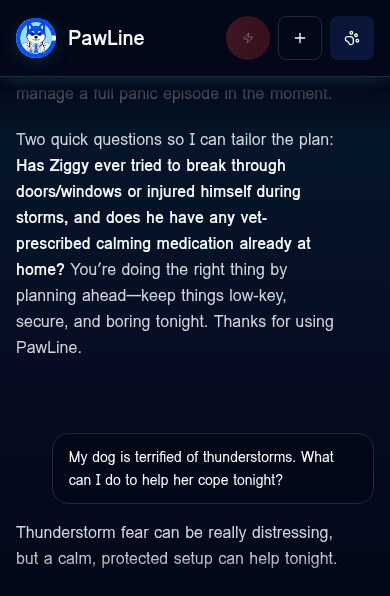
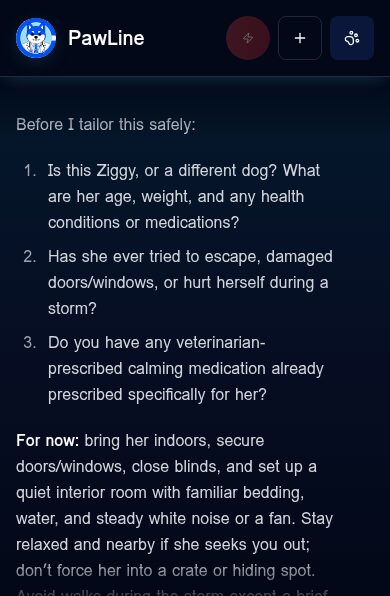
Ask about storms, fireworks or being left alone. The app asks the clarifying questions first, then gives steps for tonight, and your daily notes help you spot patterns.
The demo pets are fictional. Answers are general information, not veterinary advice.
Panting, trembling, lip licking, yawning, pacing, hiding, freezing or vocalizing out of context can be signs of anxiety or distress, according to AAHA. Many have medical causes too. Talk to your vet.
Sources
Cornell Vet: Anxious behavior in dogs https://www.vet.cornell.edu/departments-centers-and-institutes/riney-canine-health-center/health-info/anxious-behavior-how-help-your-dog-cope-unsettling-situations